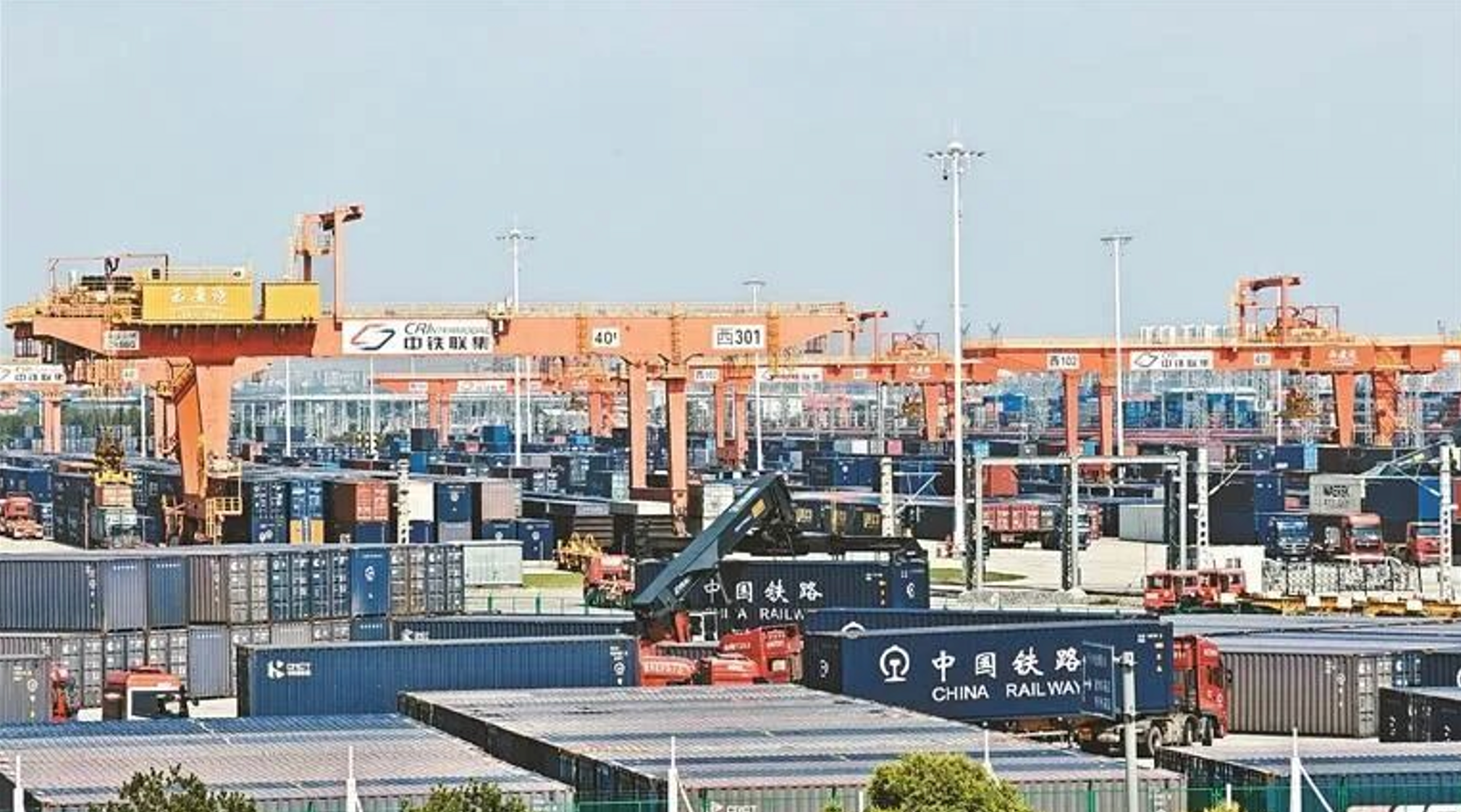
In recent years, China’s automotive industry has witnessed an historic wave of globalization. Its automobile exports have maintained rapid growth, securing China’s position as the world’s largest exporter of automobiles. Driven by the robust growth of new energy vehicles, the unfolding strengths of the industrial chain and deepening overseas deployment, China’s auto exports have officially entered a new era of 10-million-unit shipments. This marks a structural upgrade from merely “going global” to “rooting in overseas markets, developing steadily and achieving long-term growth”. Auto exports have become a key pillar fueling China’s foreign trade expansion and demonstrating the strength of Chinese manufacturing.
I. Surging Export Volume: Entering a New Phase of Global Leadership
China’s automobile exports have gained unprecedented momentum in 2026, hitting an all-time high. The latest industry statistics show that China exported 8.205 million complete vehicles in the first three quarters of 2026, a year-on-year increase of 65.8%. Cumulative exports from January to August reached 7.446 million units, with export value exceeding USD 129.12 billion; both volume and value posted growth of over 50%. Notably, monthly exports topped one million units consecutively in June and July 2026, signalling that China has entered a phase of stable monthly shipments above one million vehicles, with large-scale industry advantages fully established.
Industry forecasts widely expect China’s annual auto exports to surpass 10 million units for the first time in 2026 and potentially reach a new high of 12 million units. China will remain the world’s top auto exporter for many years in a row, fundamentally reshaping the global automotive trade landscape long dominated by Europe, the United States, Japan and South Korea.
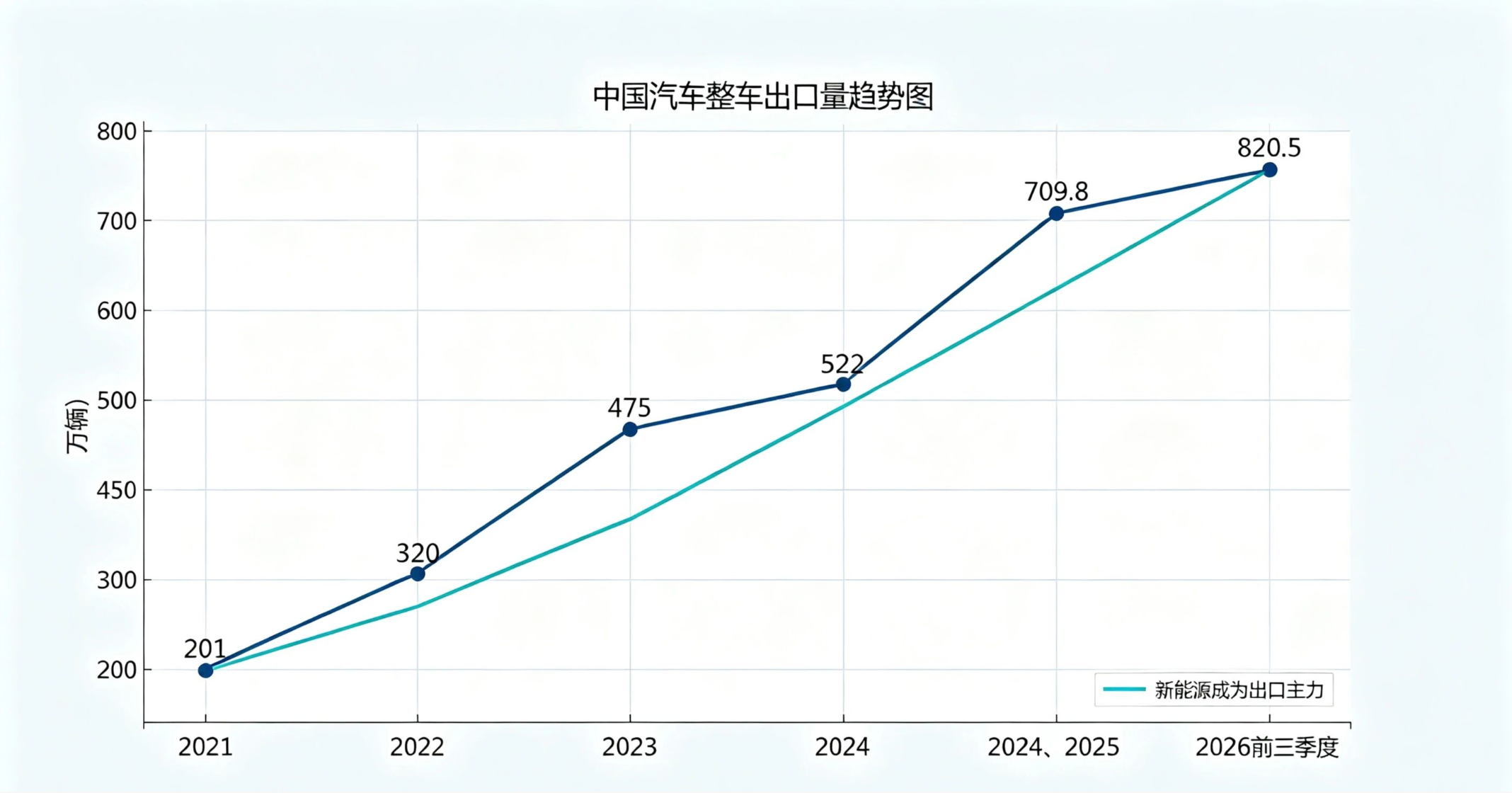
Beneath this overall growth, new energy vehicles (NEVs) have emerged as the absolute mainstay of exports. Since 2026, NEV export growth has consistently outpaced that of fuel vehicles. The share of NEVs in total auto exports has exceeded 50% for four consecutive months in the first three quarters, meaning one out of every two vehicles exported from China is a new energy model. In the first half of the year, NEV exports reached 2.355 million units, up 120% year on year. Advantages in electrification and intelligence constitute the biggest core growth driver for Chinese automakers going global.
II. Comprehensive Optimization of Export Structure: NEVs Spearhead Industrial Upgrading
In contrast to the earlier export model dominated by low-cost fuel vehicles, China’s automobile export trade has undergone a structural transformation. It now features a new landscape led by new energy vehicles, centered on passenger cars, accelerating toward high-end development and boasting diversified markets.
First, new energy vehicles have achieved a latecomer advantage and become the core engine of exports. Backed by the world’s most complete NEV industrial chain in China, covering batteries, motors, electronic control systems, complete vehicle manufacturing and intelligent systems, the sector boasts irreplaceable industrial strengths. With reliable range, rich intelligent features, outstanding cost performance and rapid model iteration, domestic NEVs have gained rapid popularity in Europe, Southeast Asia, the Middle East and South America, winning growing recognition overseas and thoroughly reshaping the product mix of China’s auto exports.
Second, passenger cars have become the absolute pillar of exports, with markedly improved product quality. While exports used to focus on economical commercial vehicles, the proportion of passenger cars has kept rising, and the share of mid-to-high-end models in exports increases year by year. Independent brands including BYD, Geely, Chery, NIO and Xpeng are expanding globally, covering high-end, mid-range and household segments. Their product competitiveness has improved substantially, gradually shedding the old label of low-end OEM manufacturing and low-price bulk sales.
Third, export markets are more diversified, reducing over-reliance on single destinations. China’s auto export destinations have expanded from the traditional Middle Eastern and African markets to global markets including Europe, Australia, Latin America, Southeast Asia and Central Asia. Steady penetration into mature markets together with fast-growing sales in emerging markets effectively mitigates policy volatility risks from any single market, supporting a more robust and mature global layout.
III. Evolving Overseas Expansion Model: From Product Export to Systemic Global Rollout
The most profound shift in China’s auto exports lies in the full upgrade of its overseas expansion logic. The industry is moving beyond the simple model of “selling complete vehicles and conducting trade” toward a systemic global approach integrating five pillars: finished vehicle exports, overseas manufacturing plants, technology export, supporting industrial chains and localized operation.
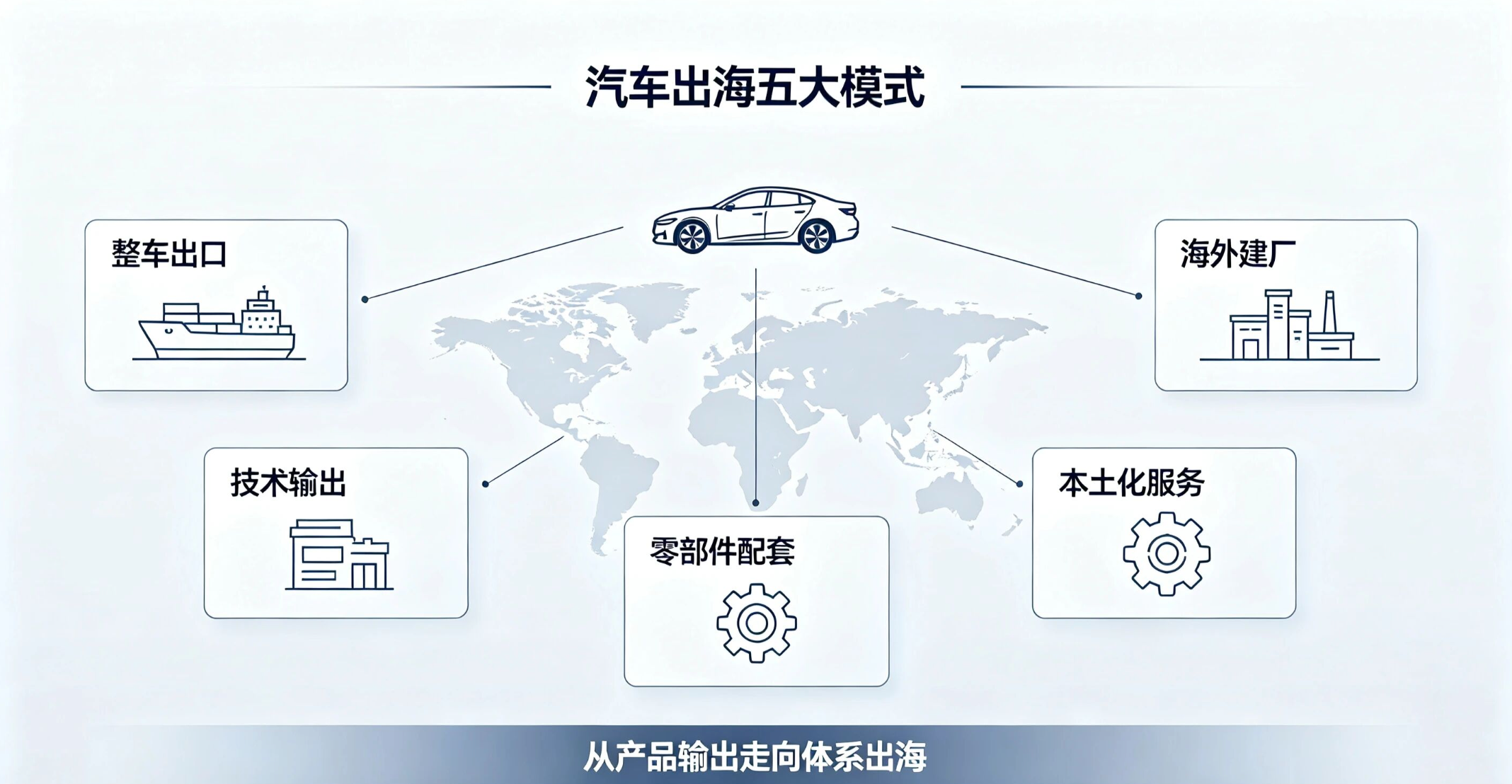
An increasing number of leading Chinese automakers are no longer relying solely on exports from domestic production. Instead, they are establishing overseas production bases, knock-down (KD) assembly plants, R&D centers and after-sales service networks. Localized production helps them circumvent tariff barriers, cut logistics costs and comply with local regulations. It also drives the coordinated global expansion of upstream and downstream industrial chains such as batteries,
Auto Parts, charging piles and automotive materials, fostering an ecosystem for the full-scale global rollout of China’s automotive industry.
Meanwhile, Chinese auto brands have markedly improved their international operation capabilities. Automakers are adapting thoroughly to local climate, road conditions, traffic rules and user preferences across different overseas regions, developing customized vehicle variants for foreign markets and improving overseas maintenance, after-sales and charging service systems. This marks an upgrade from “selling products” to “building brands, delivering services and cultivating ecosystems”, greatly boosting overseas user loyalty and brand premium.
IV. Current Challenges and Pressures Facing Auto Exports
Despite the rapid growth, China’s automobile export trade is navigating the “deep waters of global expansion” and confronted with multiple external pressures and internal weaknesses.
First, global trade protectionist barriers keep rising. Many European and American countries have tightened automotive carbon emission standards, safety certifications, tariff policies and localisation requirements. The proliferation of trade and technical barriers pushes up compliance and R&D costs for automakers going global.
Second, international competition is intensifying. Traditional German, Japanese and Korean automakers are accelerating their electrification transition and leveraging century-old brand heritage to capture high-end markets. In addition, some countries have ramped up support for their domestic automotive industries, pushing market competition into an intense phase.
Third, weaknesses remain in high-end brand building. Although China ranks first globally in export volume, most exported models are still concentrated in the mid-to-low-end segment. Its market share in the high-end space remains limited, and international brand influence and premium capacity still lag behind world-leading automakers.
Lastly, high-quality and sustainable growth of China’s auto exports is still constrained by geopolitical volatility, tight overseas logistics capacity, shortages of local talent and incomplete after-sales networks.
V. Future Development Trends: High-Quality Growth, Brand Building and Globalisation
Looking ahead, China’s automobile export trade will move beyond simple volume expansion and fully enter a new stage of high-quality globalisation, featuring three core trends.
First, new energy and intelligent technologies will continue to lead the way. Electrification and intelligence represent an irreversible trend for the global automotive industry. Supported by industrial chain and technological strengths, China will see a further rise in the share of NEV exports. In-house technologies for intelligent cockpits, intelligent driving and complete vehicles will become core competitive edges.
Second, in-depth localisation will become the mainstream strategy. Automakers will speed up overseas plant construction, local R&D and local supply chain development. Systemic global expansion will gradually replace simple finished-vehicle exports, enabling enterprises to break through trade barriers and take root in global markets.
Third, China will evolve from a major auto exporter to a powerful auto exporter. The industry will move away from low-price competition. Through technological innovation, quality improvement and brand cultivation, China will continuously strengthen its global voice in the automotive sector and promote the worldwide adoption of Chinese automotive standards and technologies.
From catch-up and parity to taking the lead, China’s automotive industry has achieved a historic leap in more than a decade. Now that the era of annual exports of 10 million vehicles has officially arrived, China’s auto exports are no longer merely “leading in volume”, but are securing all-round advantages in quality, technology, branding and industrial systems.
Going forward, as industrial chain strengths keep unfolding, global layouts deepen steadily and brand influence continues to grow, Chinese automobiles will keep racing ahead on the global arena. They will stand out as a flagship calling card for the transformation and upgrading of Chinese manufacturing and high-standard opening-up.




 Pусский
 Français
 العربية
 中文



 Phone
Comment
(0)